Most Popular Googled Stairlift Questions, Answered
There are so many stairlift options out there that it can feel a little daunting knowing where to start. Google trends research show that the demand for stairlifts has grown steadily over recent years, with thousands of internet users researching everything from exact stairlift pricing to stairlift daily running costs. We want to make sure no stairlift question is left unanswered, giving you total peace of mind before making a decision. Read on to get clear answers to the internet’s most frequently asked stairlift queries.
Is there a difference in cost across stairlift models?
Yes, stairlift prices vary significantly based on your individual home, physical needs, and the specific brand you choose. The biggest factor influencing the cost is the shape of your staircase:
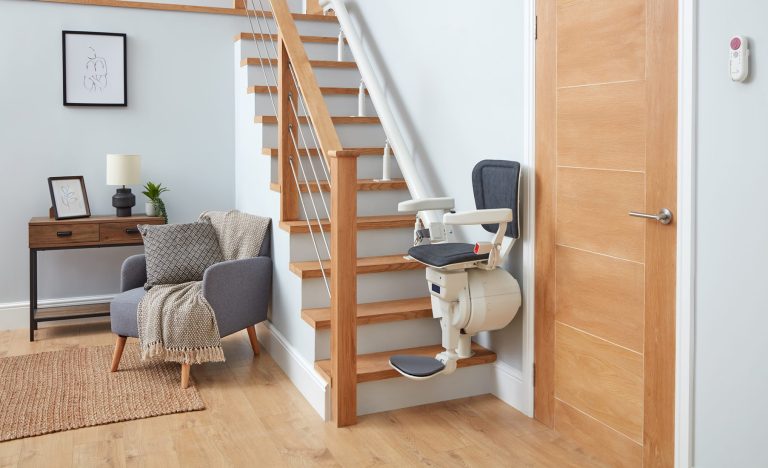
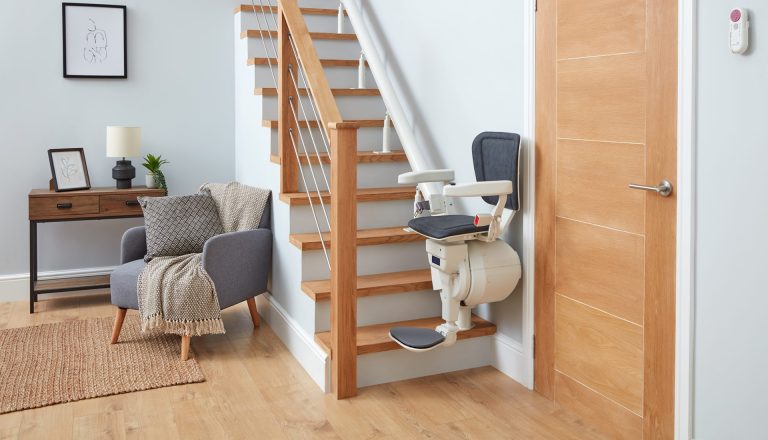
- Straight Stairlifts: On average, models with straight rails range between £2,000 and £4,000.
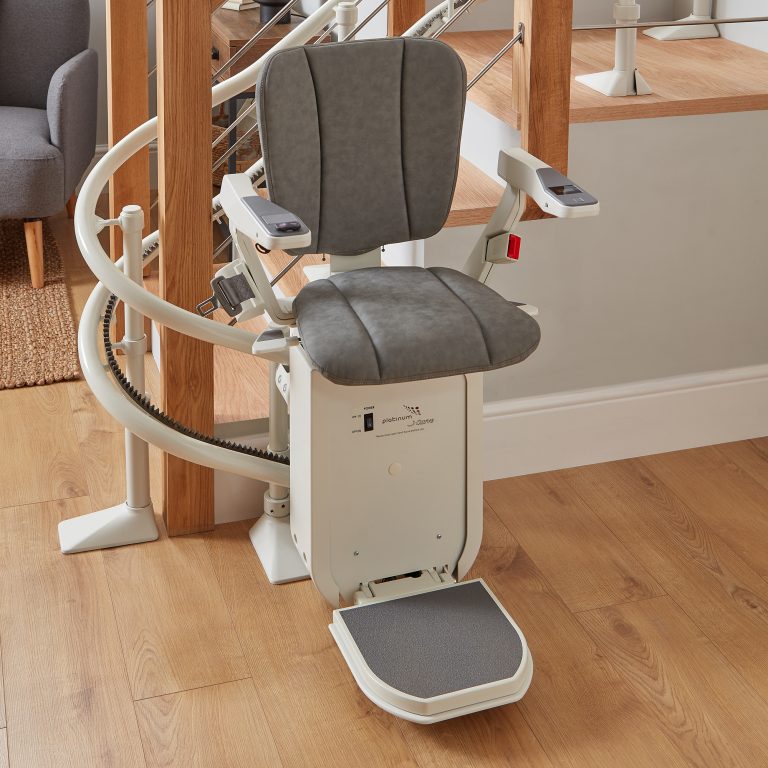
- Curved Stairlifts: If your stairs have a turn, intermediate landing, or fan steps, a bespoke curved rail is required. Prices typically range from £5,000 to £10,000.
However, our curved stairlift prices start at £4,760, including a 2-year stairlift warranty
Other variables that impact the price include the total length of the stairs, choosing between a manual or powered swivel seat, travelling across multiple floors, and any custom ergonomic features.
How do I fit a stairlift?
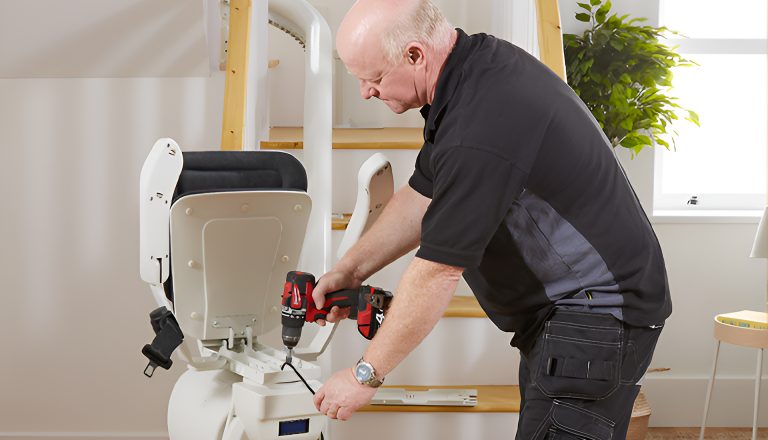
Installing a stairlift is a highly precise engineering task. We strictly advise against trying to fit a stairlift yourself. When you purchase a lift through Leodis Stairlifts, professional installation by an expert engineer is included in your quote.
When fitting the lift, our engineers secure heavy-duty brackets directly onto the stair treads (the steps themselves), using 2 to 5 specialised screws per bracket. The rail is then mounted onto these brackets, keeping it perfectly elevated. Our engineers are highly trained to ensure minimal disruption as possible. We are incredibly respectful.
Do stairlifts damage stairs or walls?
This is one of the most common worries we hear, but you can rest easy – stairlifts do not attach to your walls. Because the brackets are anchored strictly into the stair treads, your wallpaper, plasterwork, and banisters remain completely untouched.
While the installation does require small holes in the steps, these are completely hidden under the rail. If the stairlift is ever removed in the future, a professional can easily fill and repair these small holes.
Our engineering teams pride themselves on leaving your home exactly how they found it. We tidy up as we go, vacuum up any dust, and ensure everything is immaculate before we hand over the keys.
How long does it take to fit a stairlift?
Our experienced installation teams have the process down to a fine art. For a standard straight staircase, a professional installation takes around 4 hours from start to finish.
How do stairlifts actually work?
The engineering behind a modern stairlift is remarkably simple and elegant, relying on a rack and pinion mechanism.
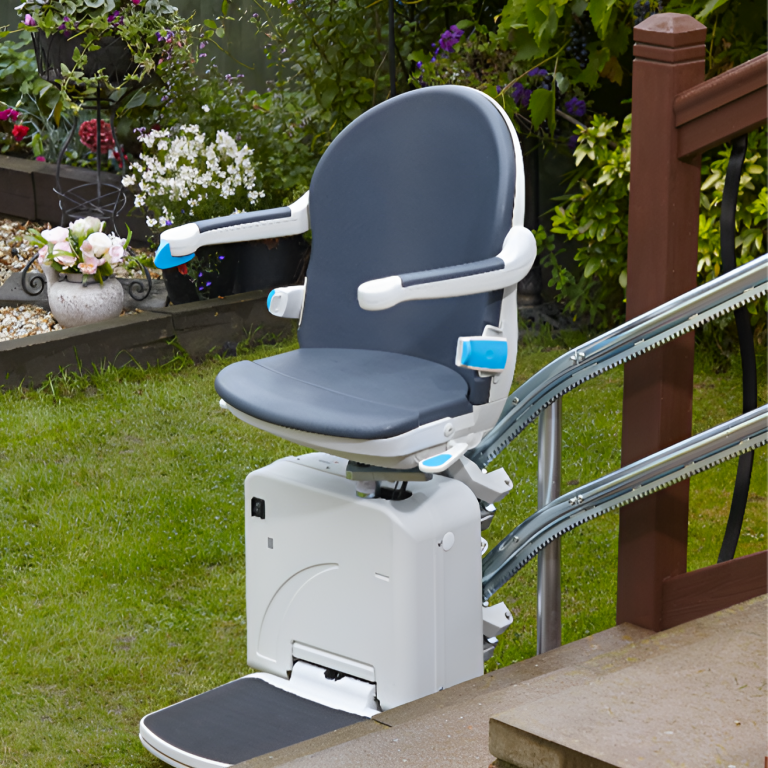
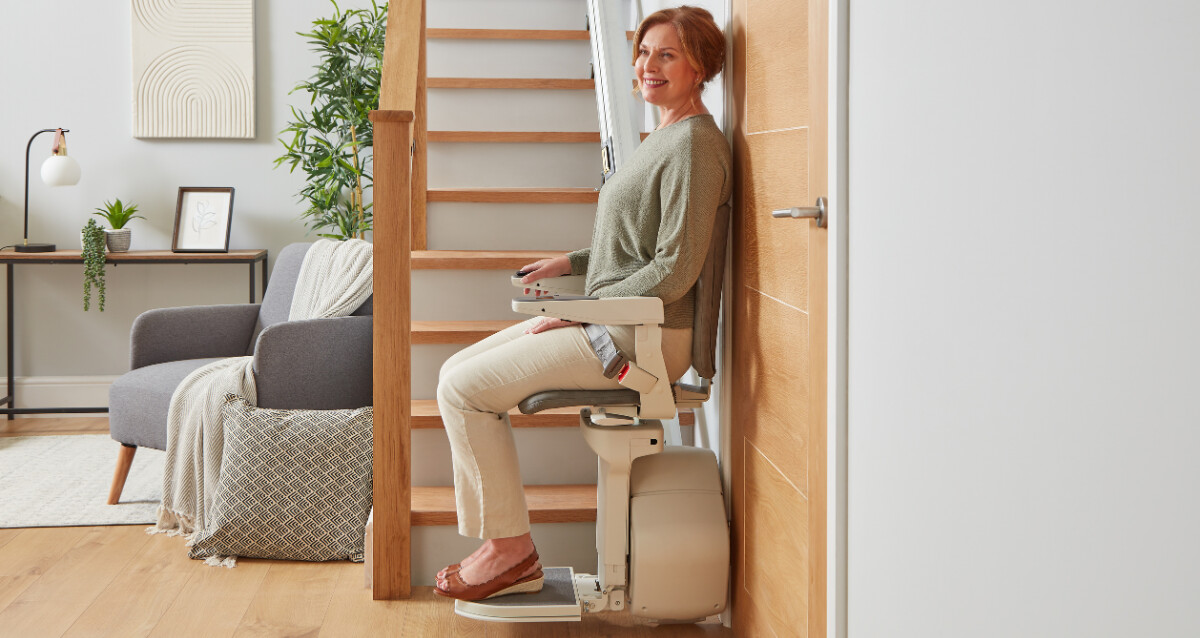
- The Power Source: The lift is driven by an internal motor housed in the base of the chair. This motor is powered by independent, rechargeable batteries.
- The Movement: The motor turns a circular gear (the pinion). This gear locks perfectly into a notched metal strip (the rack) running along the inside of the rail. As the gear rotates, it smoothly moves the carriage up or down the track.
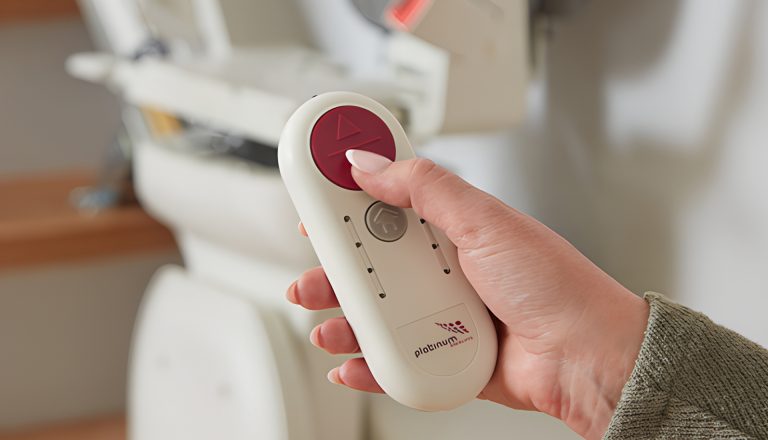
- The Controls: A simple directional toggle switch on the armrest controls the movement. The lift will gently slow down, beep, and stop automatically when it reaches the top or bottom landing. Modern systems also come with wireless remote controls so you can “call” the empty lift to your floor.
Are stairlifts expensive to run?
Not at all. Many people assume a stairlift will skyrocket their electricity bill, but they actually use very little energy, roughly 0.024 kWh per journey.
To put that into perspective:
- An average washing machine uses about 793 Watts per hour.
- A standard stairlift uses just 24 Watts per hour of active travel.
If you use your stairlift 4 times a day, it consumes roughly 35 kWh per year. Based on current UK utility rates, running your stairlift costs less than £12 per year. It is actually cheaper to run annually than a standard kitchen kettle!
How long does it take to charge a stairlift battery?
It typically takes between 8 to 12 hours to charge a flat stairlift battery back up to 100%.
The most common reason a battery drains is simply because the carriage wasn’t parked correctly. Stairlifts charge continuously through contact points at the designated “parking stations” at the very top and bottom of the stairs. Always ensure you ride or remote-control the lift fully into its parking spot after use. Most modern units will sound a gentle alert tone if it has been left parked off its charging point.
Why is my stairlift showing an error code, and how do I reset it?
If your diagnostic display panel is showing a code, it isn’t always a cause for panic, many codes simply indicate the lift’s current status (like being parked or switched off).
If the lift seems unresponsive, you can attempt a simple reset:
- Turn off the main power switch on the chair or remove the key.
- Wait 30 seconds, reinsert the key, and turn the switch back on.
- Use the armrest control or remote to test the movement.
Safety Warning: For your own safety and to avoid voiding your warranty, never attempt to manually dismantle, move, or remove a stairlift yourself.
If a basic reset doesn’t resolve the code, consult your user handbook or contact the Leodis customer service team on 0800 880 7135.
If you ever need your stairlift removed, our qualified engineers can safely manage the removal process for you. We also offer a buy back fee.
We hope this answers some of your questions.